By Jurgita Lapienyė, Chief Editor at Cybernews
When Alibaba unveiled Qwen3-Coder last week, the company’s PR machine went into overdrive, touting its prowess against OpenAI’s GPT-4 and Anthropic’s Claude.
But while Silicon Valley obsesses over benchmark scores and coding capabilities, were missing the forest for the trees. This could become a potential security hell wrapped in open-source packaging.
The problem isnt that Chinese companies are building competitive AI. The problem is that Western developers and companies could soon find themselves sleepwalking into a future where their critical infrastructure could be compromised by code they dont fully understand, generated by models they cant fully trust.
The tech industry is so dazzled by AIs productivity gains faster coding, automated debugging, instant solutions that theyre likely to ignore the security implications.
Like someone walking in their sleep toward a cliffs edge, Western businesses may soon be moving forward on autopilot, seduced by convenience while oblivious to danger.
In some cases they already are.
Just take a look at S&P 500 companies Cybernews’s researchers have identified 327 S&P 500 companies that publicly report using AI tools in their operations, and found 970 AI-related potential security issues. Adding another foreign-developed AI tool to this mix could exponentially increase these risks.
The Supply Chain Attack No One Is Discussing
Think about how modern software development works. Developers increasingly rely on AI assistants to write code, debug applications, and even architect entire systems.
Now imagine if those AI assistants could subtly introduce vulnerabilities not obvious bugs that would trigger immediate red flags, but clever weaknesses that could lie dormant for months or years.
Weve seen supply chain attacks evolve from simple malware injection to sophisticated, patient campaigns like SolarWinds.
An AI model trained on millions of code repositories could theoretically learn to inject context-appropriate vulnerabilities that would pass human code review.
When that AI is developed by a company operating under China’s National Intelligence Law, which requires cooperation with state intelligence work, the risk calculus changes dramatically.
The Data Vacuum Problem
If adopted, every line of code fed into Qwen3-Coder for assistance would become potential intelligence.
Should Western developers use this tool to debug their proprietary algorithms or optimize their security protocols, where would that information go?
Alibaba claims the model can work on “complex coding workflows” exactly the kind of high-value intellectual property that nation-states love to acquire.
The open-source label shouldnt fool anyone. While the model weights might be public, the infrastructure supporting it, the telemetry it could collect, and the patterns it might observe remain opaque.
The Agentic AI Wildcard
Alibaba’s emphasis on “agentic AI coding tasks” should set off alarm bells. Were talking about AI systems that can work independently on programming challenges essentially, autonomous code generation with minimal human oversight.
In the wrong hands, this capability transforms from a productivity tool into a weapon.
Imagine an AI agent that could analyze an entire codebase, identify security measures, and craft exploits tailored to specific architectures.
Now imagine that capability being refined and directed by a foreign adversary. The same technology that helps developers work faster could help attackers move at unprecedented speed and scale.
The Regulatory Void
The regulatory response is probably the most frustrating. For instance, the U.S. spent years debating TikTok’s data collection, but they arent preparing for a tool that could literally write itself into Americas critical systems.
CFIUS reviews foreign acquisitions, but whos reviewing foreign AI models that could achieve the same strategic objectives without buying a single company?
The Biden administrations AI executive order focuses on domestic development and safety testing, but it barely scratches the surface of foreign AI integration risks.
The Western nations need frameworks that treat code-generating AI as critical infrastructure, with security requirements to match.
What Needs to Happen Now
First, before Qwen3-Coder gains traction, any organization handling sensitive data or critical infrastructure should implement strict policies about AI-assisted development. If you wouldnt let a foreign national review your source code, why would you let their AI model generate it?
Second, we need to develop security tools designed specifically to detect AI-generated vulnerabilities. Traditional static analysis wont catch sophisticated backdoors designed to evade exactly those tools.
Third, the tech industry needs to wake up to the reality that in the AI age, every model is potentially dual-use technology. The same capabilities that make Qwen3-Coder attractive to developers make it dangerous in an adversarial context.
The irony is palpable: Westerners, especially Americans, are worried about China stealing their technology while were ready to potentially hand them the keys to build backdoors into it.
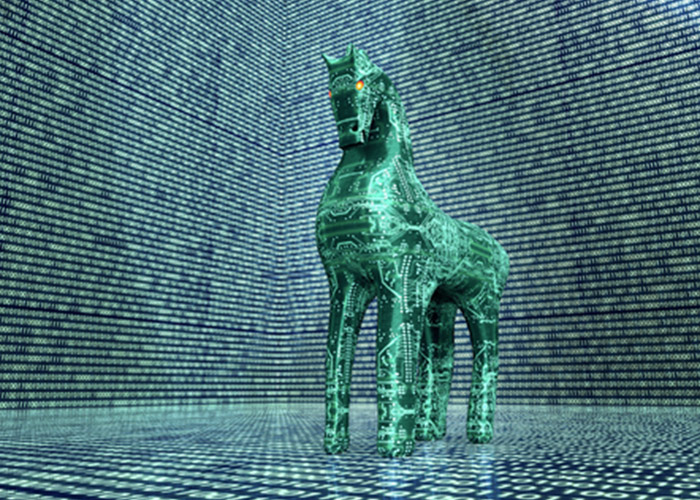
Alibaba’s Qwen3-Coder might be a powerful coding assistant, but in the grand chess game of cyber warfare, it could become the most elegant Trojan horse if Western countries invite it through their gates.
focuses on domestic development and safety testing, but it barely scratches the surface of foreign AI integration risks.
The Western nations need frameworks that treat code-generating AI as critical infrastructure, with security requirements to match.
What Needs to Happen Now
First, before Qwen3-Coder gains traction, any organization handling sensitive data or critical infrastructure should implement strict policies about AI-assisted development. If you wouldnt let a foreign national review your source code, why would you let their AI model generate it?
Second, we need to develop security tools designed specifically to detect AI-generated vulnerabilities. Traditional static analysis wont catch sophisticated backdoors designed to evade exactly those tools.
Third, the tech industry needs to wake up to the reality that in the AI age, every model is potentially dual-use technology. The same capabilities that make Qwen3-Coder attractive to developers make it dangerous in an adversarial context.
The irony is palpable: Westerners, especially Americans, are worried about China stealing their technology while were ready to potentially hand them the keys to build backdoors into it.
Alibaba’s Qwen3-Coder might be a powerful coding assistant, but in the grand chess game of cyber warfare, it could become the most elegant Trojan horse if Western countries invite it through their gates.