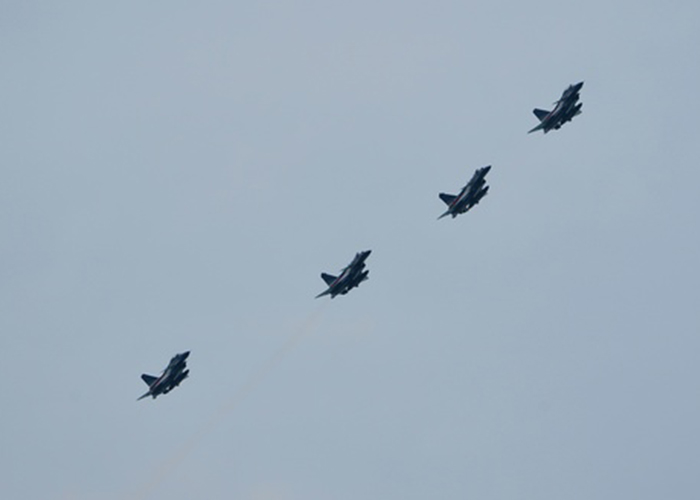
Singapore Airshow 2026 will return to the Changi Exhibition Centre from 3 to 8 February, marking both its 10th edition and two decades as a fixture in the global aerospace, defence and space calendar. The milestone event arrives at a time when Asia-Pacific has become the primary engine of global aviation growth, accounting for an estimated 52 per cent of industry expansion in 2025.
According to the International Air Transport Association, airline net profits are forecast to reach US$41 billion in 2026, with passenger numbers exceeding five billion travellers worldwide. Asia-Pacific is expected to sustain this momentum, with regional load factors projected to hit 84.4 per cent in 2026 — the highest level on record. These figures provide important context for the Airshow’s growing strategic weight, particularly as governments and industry recalibrate for post-pandemic demand, sustainability pressures and geopolitical uncertainty.
More than 1,000 companies from over 50 countries and regions are expected to participate, spanning commercial aviation, defence, space, MRO, advanced manufacturing and emerging technologies. Established aerospace and defence primes including Airbus, Boeing, Lockheed Martin, Leonardo, Rolls-Royce, RTX, Saab, Thales and ST Engineering will be joined by a newer generation of defence and aerospace technology firms focused on autonomy, artificial intelligence, space-based intelligence and uncrewed systems.
The exhibitor mix reflects the sector’s structural shift towards software-defined capability, autonomy and data-driven operations. Companies such as Anduril, Helsing, Quantum Systems, Shield AI and DroneShield signal the increasing convergence of defence, AI and aerospace, while space-focused participants including Hawkeye 360, Radia and Transcelestial underscore the growing importance of orbital infrastructure, intelligence and communications in regional security and economic planning.
National pavilions from across Asia-Pacific, Europe and North America will once again form the backbone of the exhibition. Expanded participation from Italy and China has contributed to the largest combined pavilion floor space in the Airshow’s history, reinforcing Singapore’s position as a neutral gateway between Western and Asian aerospace and defence markets.
Beyond the exhibition itself, Singapore Airshow continues to function as an economic catalyst. The 2024 edition generated more than S$391 million in economic activity and attracted over 110,000 trade and public attendees. Organisers expect a comparable impact in 2026, supported by expanded forums and the introduction of Space Summit 2026.
For the first time, the Airshow ecosystem will formally extend into the space domain through Space Summit 2026, held from 2 to 3 February at Marina Bay Sands. Backed by Singapore’s Office for Space Technology & Industry and the Economic Development Board, the Summit positions Singapore as a convening point for Asia-Pacific space policy, investment and commercial collaboration.
Under the theme “New Frontiers: Shaping a Responsible and Inclusive Space Future”, the Summit will bring together policymakers, space agencies, investors and industry leaders to examine infrastructure development, sustainability, capital deployment and the emerging in-space economy. McKinsey forecasts the global space economy could reach US$1.8 trillion by 2035, a figure that is driving heightened regional interest in launch systems, satellite services and downstream applications.
Senior representatives from multiple national and regional space agencies are expected to participate, alongside keynote contributions from Airbus Defence & Space CEO Michael Schoellhorn and industry leaders from ST Engineering. The program also places deliberate emphasis on diversity, with senior female leaders featured across the agenda.
Sustainability remains a central theme across the broader Airshow program. Asia-Pacific is emerging as a proving ground for sustainable aviation fuel adoption, driven by early mandates, growing production capacity and government-backed investment. Industry forecasts suggest SAF could account for up to five per cent of global jet fuel consumption by 2030, while Singapore has set a national target of one per cent SAF adoption by 2026. Neste returns as Sustainable Aviation Partner, using the AeroForum platform to address the operational and commercial realities of scaling SAF supply chains.
Innovation and workforce development are also core priorities. Dedicated zones for startups, digital aviation and next-generation defence systems are designed to connect emerging technology providers with established primes and government customers. Parallel programs such as AeroCampus focus on skills development and talent pipelines, recognising workforce availability as a critical constraint on long-term growth.
As geopolitical competition, digitalisation and sustainability reshape aerospace and defence, Singapore Airshow 2026 reflects how the industry’s centre of gravity continues to shift towards Asia-Pacific. More than a trade exhibition, the Airshow increasingly serves as a strategic forum where governments, industry and investors align on the technologies, partnerships and policies that will define the region’s aerospace and security landscape over the next decade.