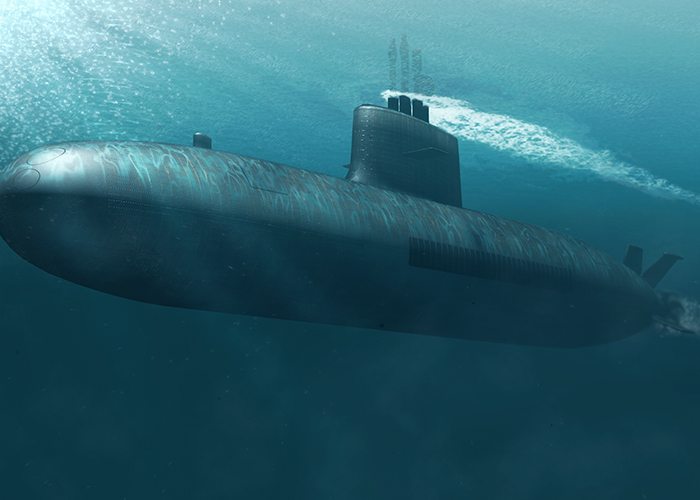
BMT has launched an in-person, expert-led submarine learning initiative aimed at building workforce awareness and skills as Canada progresses plans to replace its Victoria-class submarines under the Canadian Patrol Submarine Project (CPSP).
The Canadian government has said the CPSP is intended to replace the Victoria-class fleet with up to 12 modern submarines, creating what BMT describes as a long-term requirement for people, organisations and industrial capabilities to support the platforms throughout their lifecycle.
BMT said the course is designed to provide an introduction to submarine systems, operations and sustainment, and to outline the range of disciplines involved in maintaining an “enduring underwater capability”, including systems engineering, software and cybersecurity, logistics, safety and assurance, training and operational readiness.
The company said the timing reflects pressure on existing specialist expertise, with much of Canada’s current submarine knowledge engaged in sustaining the Victoria-class fleet. It argued additional technical capacity will be needed if the future fleet expands and as submarines become more digitally connected.
Building capability before it is needed
BMT said the programme is intended for technical specialists, industry partners, government organisations and other professionals involved in Canada’s “growing submarine enterprise”, and aims to explain how submarines differ from surface vessels and the engineering, operational and safety considerations associated with submerged operations.
A resource for Canada’s broader submarine enterprise
The company said the initiative is aimed at strengthening shared technical understanding across government, industry, suppliers and the workforce supporting submarine acquisition and sustainment, and at building a more connected ecosystem for future undersea programmes.
Drawing on established submarine enterprises
BMT said its Canadian training offer draws on experience supporting maritime and defence programmes in Canada and North America, the United Kingdom and the Asia-Pacific region, including Australia. It said its wider training portfolio includes a Submarine Design and Engineering Course offered in Australia, as well as courses titled Warships 101 and Whole Life Warship Capability Management.
The release also pointed to workforce development themes in allied programmes such as AUKUS, which it said is emphasising industrial readiness and the ability to sustain complex undersea technologies, including cyber and electronic warfare, autonomy, artificial intelligence and quantum technologies.
Supporting Canada’s future workforce
Emily Spurling, Regional Business Development Director, North America, BMT, said:
“New submarines alone will not deliver capability; capability comes from people, knowledge and experience. As Canada prepares for its next generation of submarines, we have an opportunity to inspire interest, share knowledge and help develop the skills needed across government, industry and the supply chain. This course is designed to contribute to that long-term effort.”
Graeme Nayler, Regional Business Director, Asia-Pacific, BMT, said:
“AUKUS demonstrates that advanced undersea capability is not defined by technology alone. It depends on whether nations can assure, integrate, operate and sustain that technology at the speed at which it is evolving.
“The lesson from the AUKUS conversation is that workforce development cannot be treated as a downstream activity. Skills, assurance, sustainment and cross-domain understanding need to develop alongside new platforms and technologies, from the earliest stages of a programme.
“Canada’s future submarine enterprise has its own distinct requirements and priorities. However, there is clear value in sharing lessons across allied maritime communities – particularly as submarine programmes become more digitally connected and as uncrewed systems, data, autonomy and cyber resilience become increasingly important to the wider undersea environment.”
BMT said the learning initiative was launched as DEFSEC Atlantic opened in Halifax on 6 October, describing the event as a forum for stakeholders involved in Canada’s future defence and marine capability to consider the workforce and partnerships required alongside long-term platform investment.