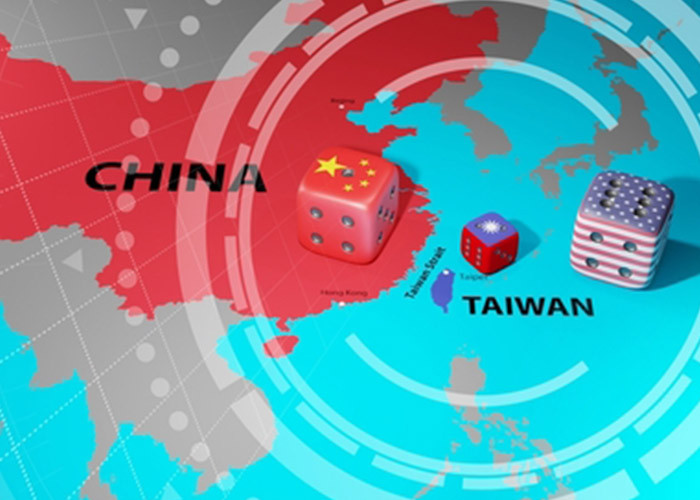
Escalating tensions between China and Taiwan risk drawing the region closer to militarisation, according to new analysis published by leading Melbourne based Think Tank, AustChina Institute (ACI). The report, authored by ACI Senior Research Fellow Dr Rashad Seedeen, highlights that while both Beijing and Taipei have increased military rhetoric and drills, the true cost of conflict would be catastrophic for all parties involved.
The report outlines Taiwan’s largest-ever military exercises, China’s intensifying rhetoric on reunification, and Washington’s continued arms support for Taipei. It concludes that “strategic ambiguity” remains the only viable stabilising policy and urges Australia to continue to resist US pressure for pre-commitments to war.
ACI CEO, Mr Quentin Kilian OAM, said Australia must stay firm in its approach as a responsible middle power.
“The Taiwan Strait does not have to become the world’s next flashpoint. Australia’s strength lies in diplomacy, not sabre-rattling. By maintaining strategic ambiguity and advocating for dialogue through multilateral forums such as APEC and ASEAN, our government can play a stabilising role and demonstrate real independence in foreign policy,” Mr Kilian said.
Dr Seedeen stressed the importance of returning to frameworks that have historically reduced tensions.
“The 1992 Consensus provided a fragile but workable balance between Beijing and Taipei, enabling trade and dialogue. Today, nationalist rhetoric is replacing dialogue with militarisation. If leaders fail to shift course, rhetoric may harden into reality, with devastating consequences for the Indo-Pacific, including Australia,” noted Dr Seedeen.
The commentary points to Australia’s track record of measured diplomacy and asks whether the current government is uniquely positioned to take pragmatic steps toward bridging tensions; steps that could foster peace rather than provoke further escalation.
“As a nation, we stand at a crossroads,” Mr Kilian added. “Australia has the regional relationships, the credibility, and the capacity. Any escalation into war would carry economic consequences for the broader region, with Australia likely to be significantly affected. It is therefore in our national interest to support efforts toward de-escalation. The real question is, do we have the political will to lead?”
The report concludes that neither China nor Taiwan can realistically achieve resolution through conflict, with war games and strategic analysis consistently showing unacceptable losses for all sides. Instead, de-escalation and diplomatic engagement remain the only viable path to regional security.
The full article, Between Rhetoric and Reality: Navigating the Taiwan Strait Crisis, is available on the AustChina Institute Publications page: https://www.aci.org.au/publications-list.