By JNP Col. Yoshimasa Adachi, PhD
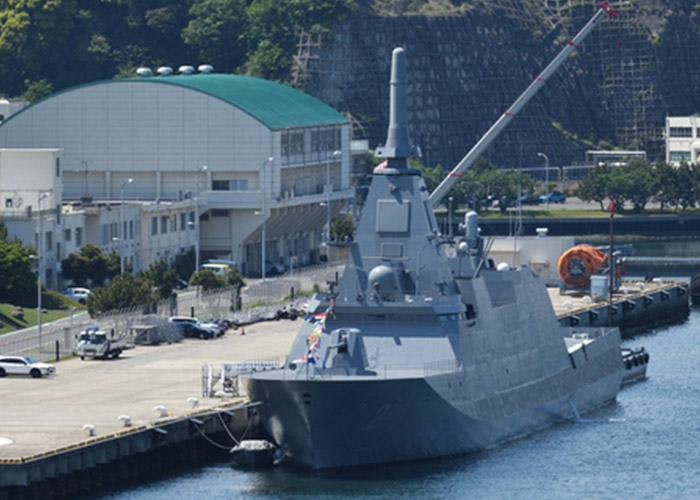
On August 5 this year, the Australian government decided to procure a new class of warships based on the Japan Maritime Self-Defense Force’s improved Mogami-class destroyer escort. The final contract is scheduled to be concluded next year. Prime Minister Ishiba posted on his official X (formerly Twitter) account, “I welcome this decision. We will work together—government and private sector alike—toward the signing of the contract.” Australia plans to acquire a total of eleven of these new vessels, with the first scheduled for delivery in 2029 and operational deployment beginning in 2030. The program is expected to reach a scale of up to 10 billion Australian dollars (approximately USD 6.48 billion), representing welcome news for Japan’s defense industry, which has faced prolonged challenges in recent years.
This new class of warship is a masterpiece of stealth design and crew reduction efficiency. For comparison, Japan’s principal competitor for this contract—the German design—requires a crew of 120 and is equipped with 16 vertical launch cells (VLS), each serving both as a missile magazine and launcher. In contrast, Japan’s vessel requires only 90 crew members—three-quarters of the German requirement—while boasting 32 VLS cells, double the German vessel’s firepower. The appeal of Japan’s design is evident in light of the Royal Australian Navy’s current manpower shortage. Although the Australian Army aims to increase its total personnel by roughly 30 percent to 80,000 by 2040, it is already short more than 4,300 soldiers, sailors, and aircrew. Considering that conventional frigates have typically required around 160 crew members, a warship that can operate effectively with only 90 aligns perfectly with the operational realities of the manpower-strapped Royal Australian Navy.
Another major advantage of the new warships is their interoperability with the armed forces of Australia’s key ally, the United States. The vessels will be equipped with weapons systems fully compatible with U.S. military platforms and capable of employing American-made missiles. This compatibility is expected to lead directly to increased procurement of U.S.-manufactured weaponry in the future. Although Australia and the United States are allied nations, bilateral relations cooled after the Trump administration indicated it would review the planned sale of nuclear-powered submarines to Australia. Likewise, the relationship between Japan and the United States—also close allies—was destabilized by the imposition of tariffs under the Trump administration. Against this backdrop, the introduction of these new vessels will not only facilitate greater integration with U.S. systems but, through the associated growth in American weapons purchases, will contribute to maintaining and strengthening the Japan–Australia–U.S. alliance network. The Australian Broadcasting Corporation (ABC) has reported that the United States is believed to have supported the selection of Japan’s design, making it likely that Canberra’s decision was welcomed in Washington. Needless to say, the strategic thinking behind the actions of Japan, Australia, and the United States is set against the backdrop of China’s rise.
For more than thirty years, China has steadily increased its defense spending at high levels, without transparency, and has rapidly expanded both the quality and quantity of its military power, with particular emphasis on nuclear and missile forces as well as maritime and air capabilities. Since announcing its ambition in 2012 to build itself into a “maritime power,” Beijing has intensified its activities in the East China Sea, South China Sea, and the Pacific Ocean.
In the waters surrounding Japan, China has designated the Senkaku Islands—an inherent part of Japan’s territory—as a “core interest,” and continues to carry out near-daily incursions into Japan’s territorial waters. The People’s Liberation Army Navy (PLAN) has maintained frequent transits into the Pacific through waters near Japan, including carrier strike groups, while PLAN survey vessels regularly intrude into Japanese territorial waters to conduct intelligence-gathering operations. Australia shares similar concerns over China’s maritime expansion. In February of this year, the Chinese navy conducted live-fire exercises near Australian waters, forcing multiple civilian aircraft to alter their flight paths. Furthermore, China has been strengthening security cooperation with Pacific island nations located along Australia’s vital sea lanes, thereby expanding its influence across the region.
The introduction of these vessels will also serve as a powerful demonstration of solidarity between Japan and Australia in response to China’s increasingly active military operations in both nations’ surrounding waters. The Japan Maritime Self-Defense Force plans to deploy 24 of the same class of warships, and the use of identical platforms by both navies will dramatically enhance interoperability—an invaluable asset in deterring Chinese activity. Australian Deputy Prime Minister and Defense Minister Richard Marles underscored this point, stating, “Our relationship with Japan has never been stronger; there is no country in the world with which we have such a strategic alignment.”
Moreover, the new ships will strengthen the presence of the United States—the allies’ mutual security partner—in the Indo-Pacific. On June 10 this year, the Chinese navy announced that its two aircraft carriers, Liaoning and Shandong, had conducted exercises in the western Pacific to test their blue-water defense and joint operational capabilities—the first time two Chinese carriers have operated in the Pacific simultaneously. According to Japan’s Ministry of Defense, the exercise simulated countering a U.S. carrier strike group, with one Chinese carrier reportedly acting as a mock U.S. carrier. This reflects China’s continuing efforts to refine its Anti-Access/Area Denial (A2/AD) strategy, designed to prevent U.S. intervention in potential conflicts such as those involving Taiwan.
However, in the face of a large and increasingly modernized Chinese military, it is becoming increasingly difficult for U.S. forces alone to counter such strategies effectively. This reality underscores the necessity of close cooperation between the United States and its key allies—first and foremost Japan and Australia. Because the new Japanese-designed vessels possess full interoperability with U.S. forces, they will enable seamless trilateral operations. For this reason, Japan, Australia, and the United States must seize Australia’s decision to procure these ships as a catalyst to further deepen their strategic partnership.
Image: Kanagawa, Japan – May 03, 2022:Japan Maritime Self-Defense Force JS Kumano (FFM-2), Mogami-class frigate. Editorial credit: viper-zero / Shutterstock.com